If your Slack discovery workflow relies on JSON exports, there’s a material risk you’re missing nearly half of the data population—without realizing it.
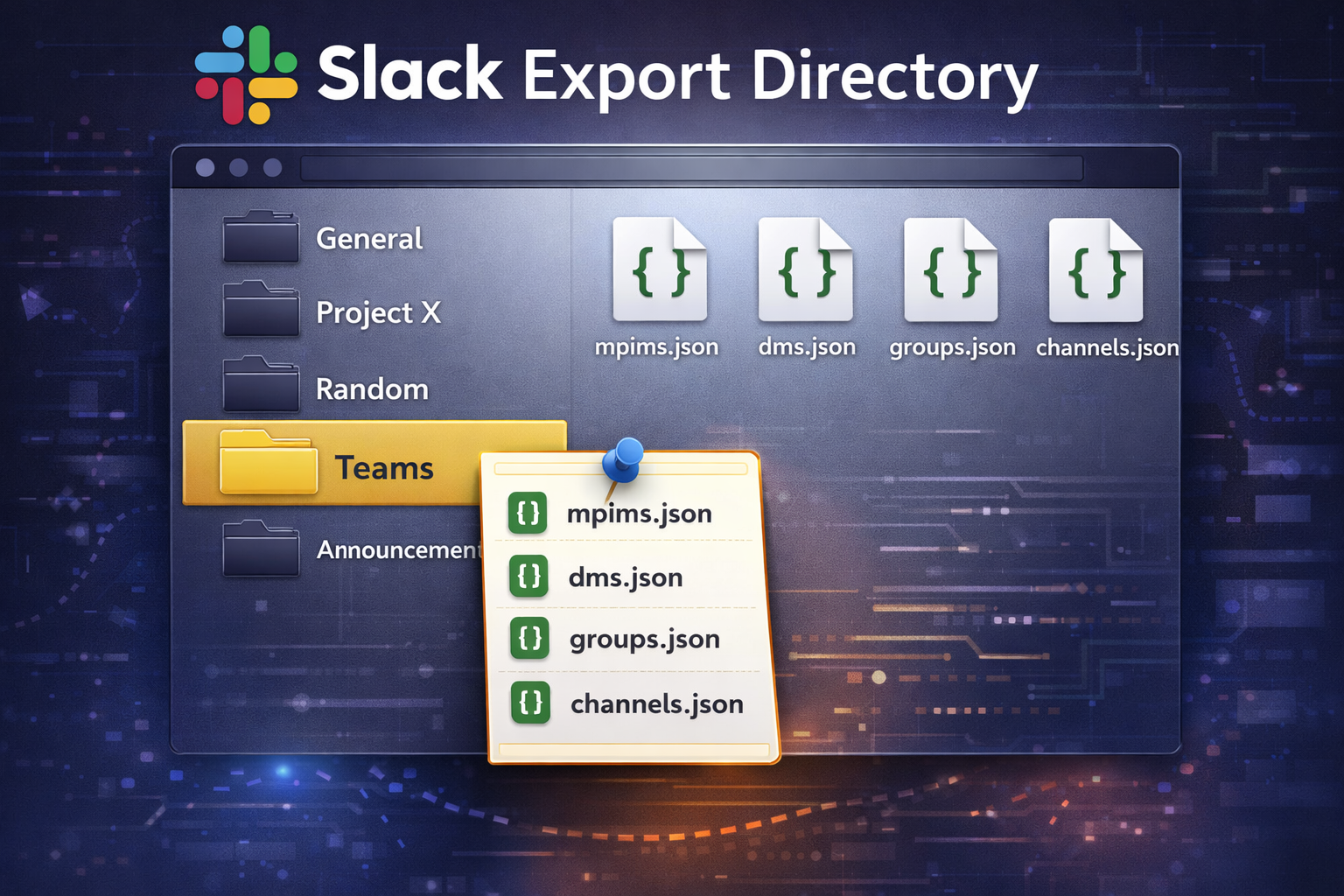
In Slack Enterprise Grid environments, a significant portion of message content does not live in the primary workspace at the root of the export. Instead, it is stored in sub-workspaces housed in a folder labeled “Teams.”
If you’ve never asked why a Slack export contains a Teams folder—or worse, ignored it—you may be overlooking massive volumes of content.
In a recent matter:
-
- 102,762,524 messages were identified in the primary (root) workspace
-
- 90,663,129 additional messages were found in Teams sub-workspaces
-
- ~47% of the total Slack population was effectively hidden below the surface
What lives in these Teams folders?
-
- Messages from subsidiary business units, regions, or functional groups
-
- Separate workspaces created for compliance, M&A, investigations, or sensitive initiatives
-
- Content commonly associated with Enterprise Grid licenses, not standard Slack plans
The risk is simple—and serious: If your collection, processing, or review workflow only targets the root workspace, you may be certifying completeness while missing tens of millions of messages.
This is not an edge case. It is a structural reality of how Slack Enterprise environments are deployed. Before you rely on counts, search results, or productions from Slack data:
-
- Confirm whether Enterprise Grid is in scope
-
- Validate whether Teams sub-workspaces exist
-
- Ensure your workflow accounts for all workspaces—not just the obvious ones
Because what you don’t see in Slack can absolutely hurt you.
Find out how StreemView can help you manage the scale and complexity of your Slack data populations with the industry leading solution for modern data ECA and investigation. Schedule a personalized demo now